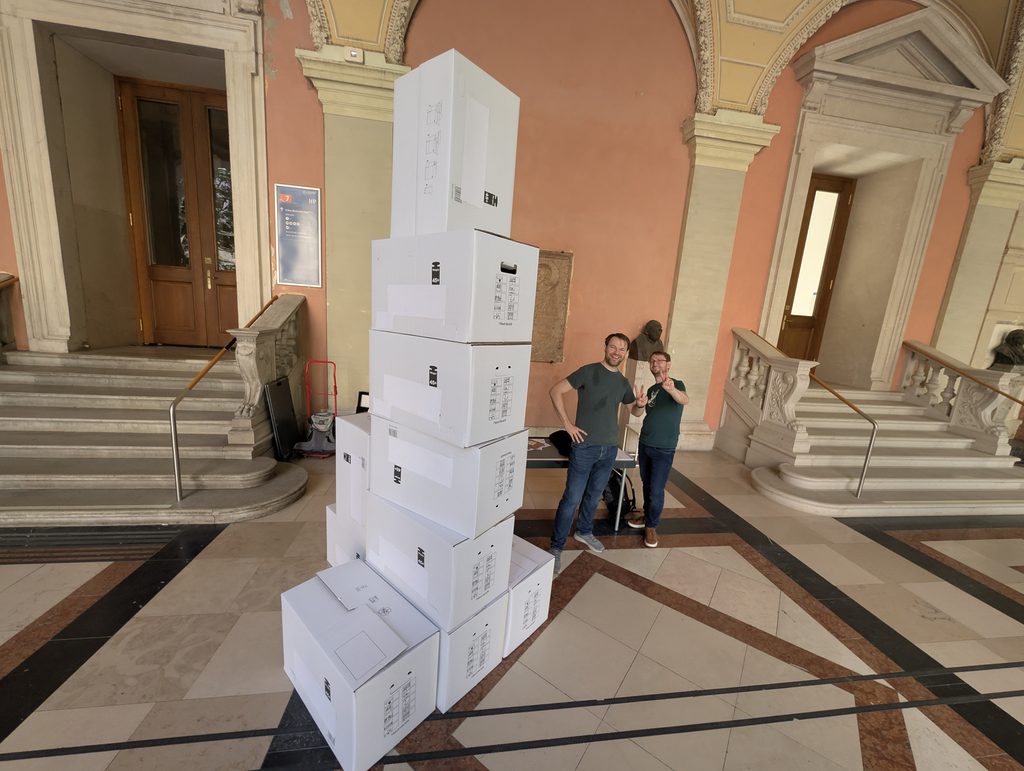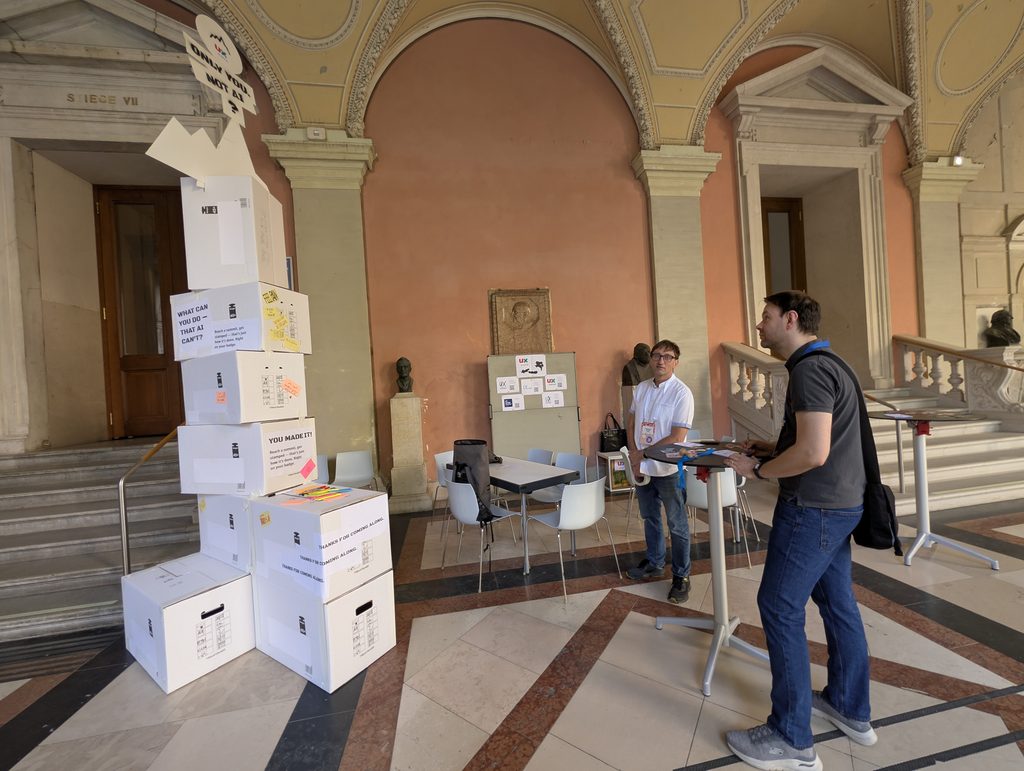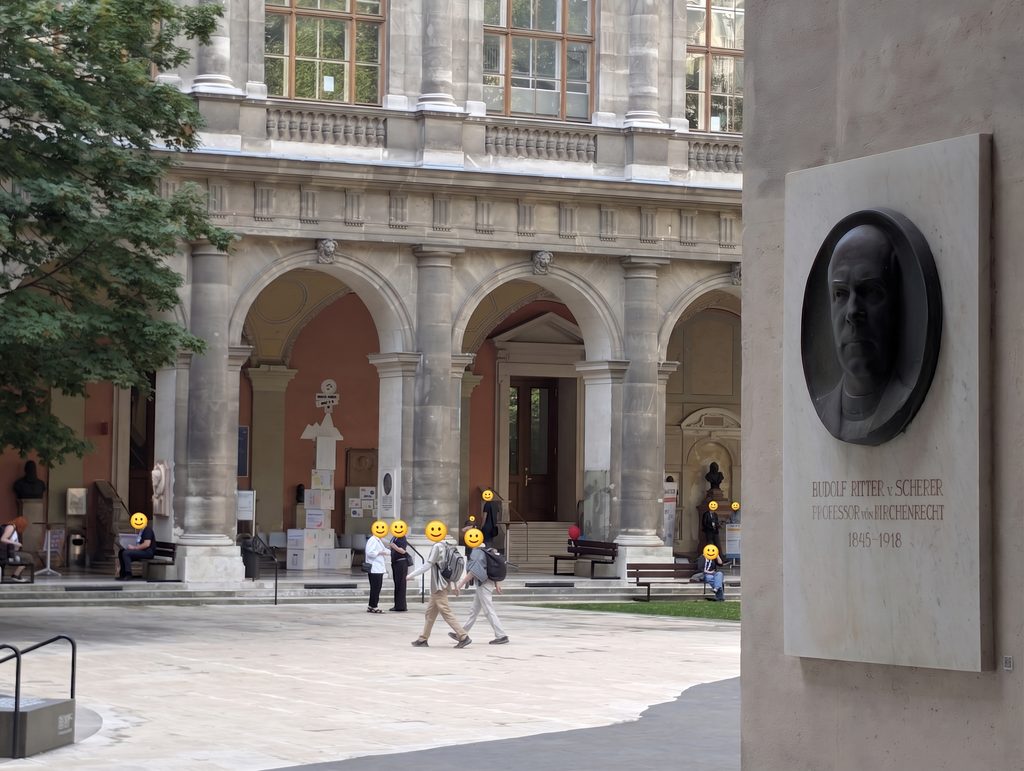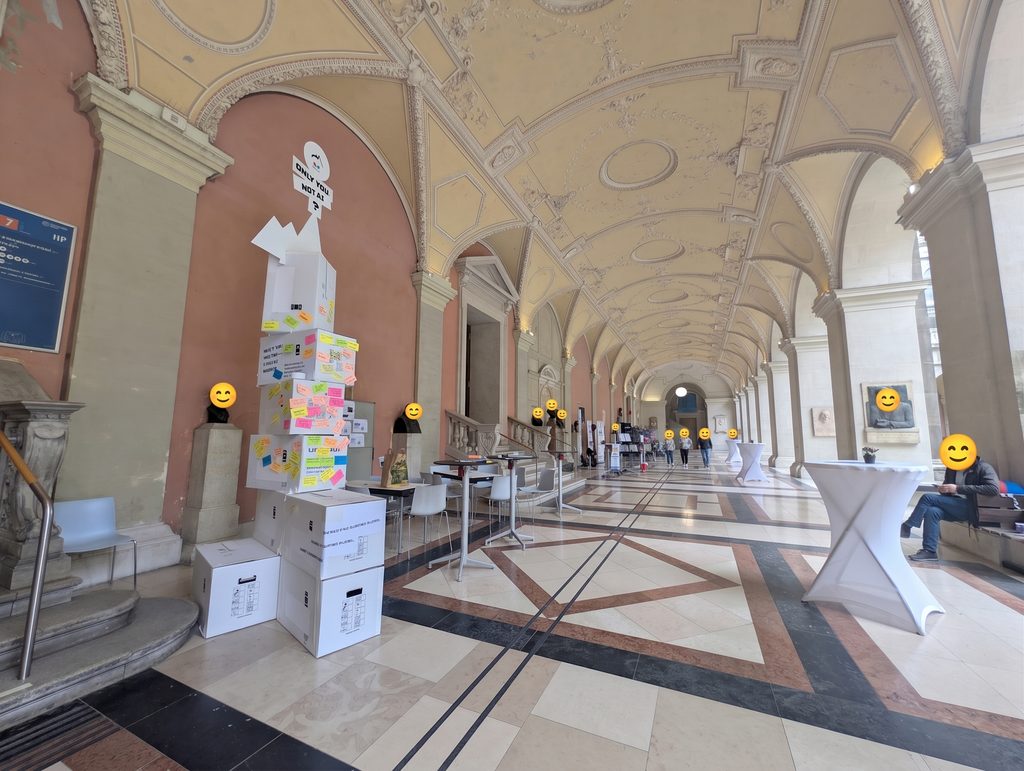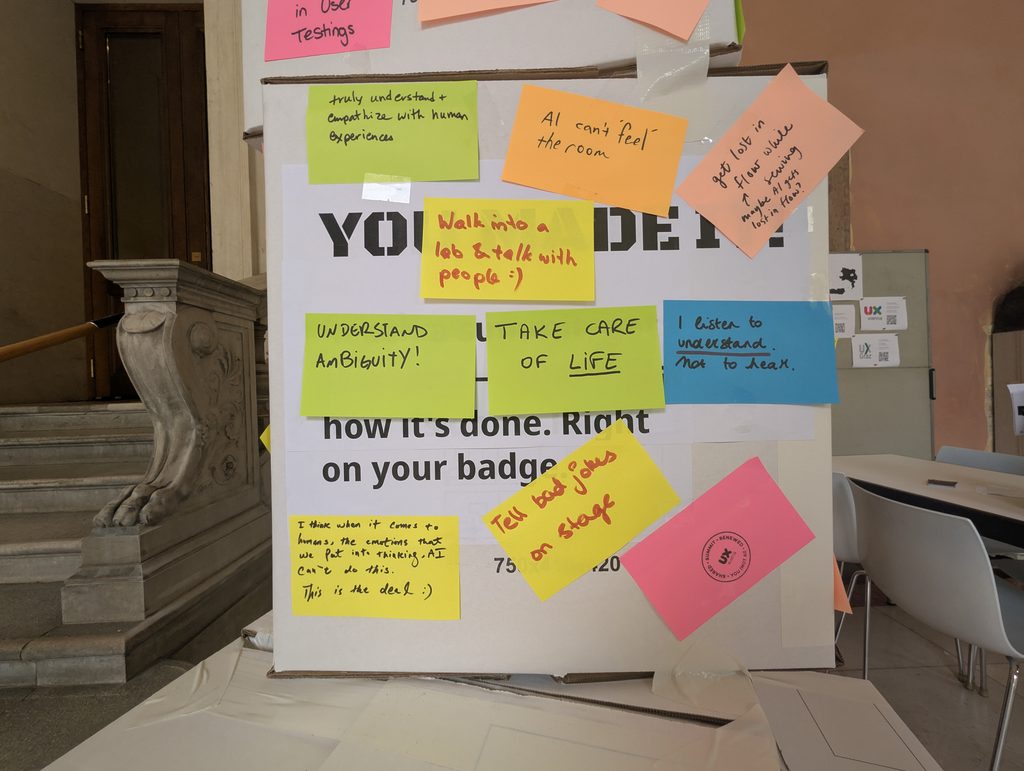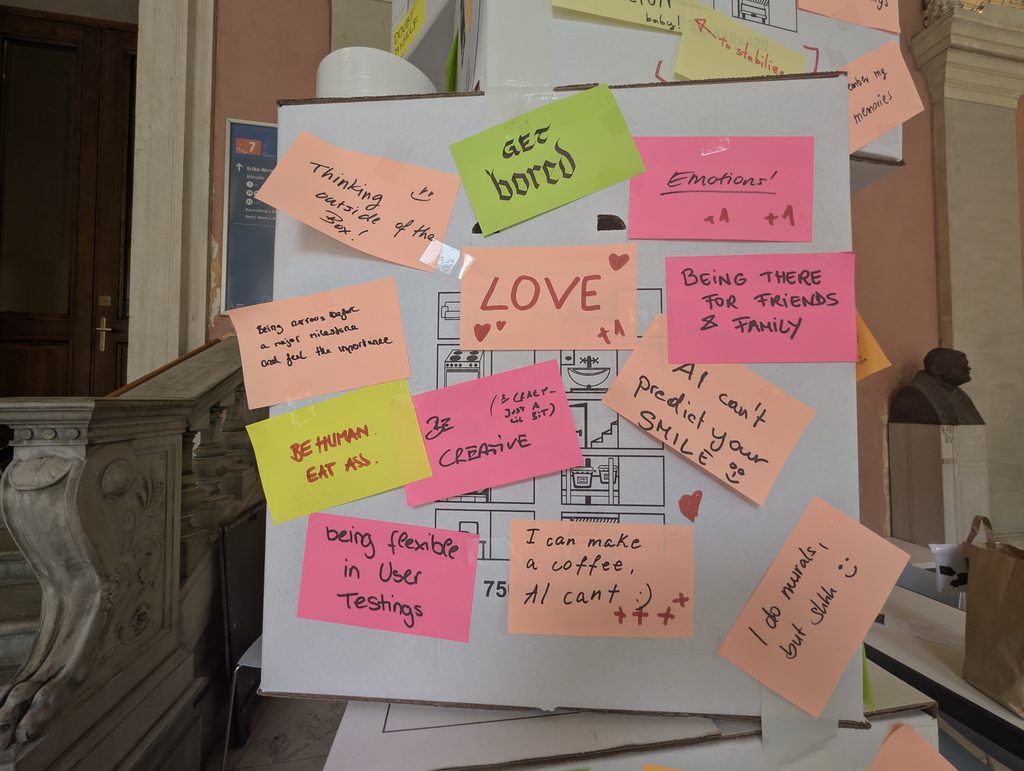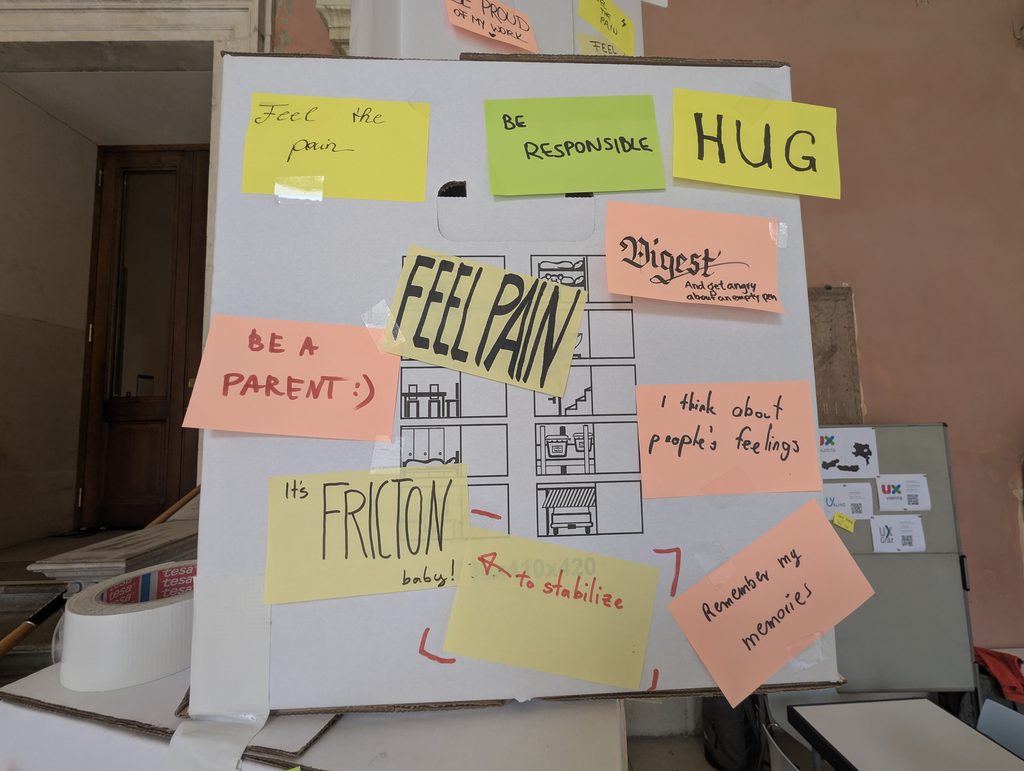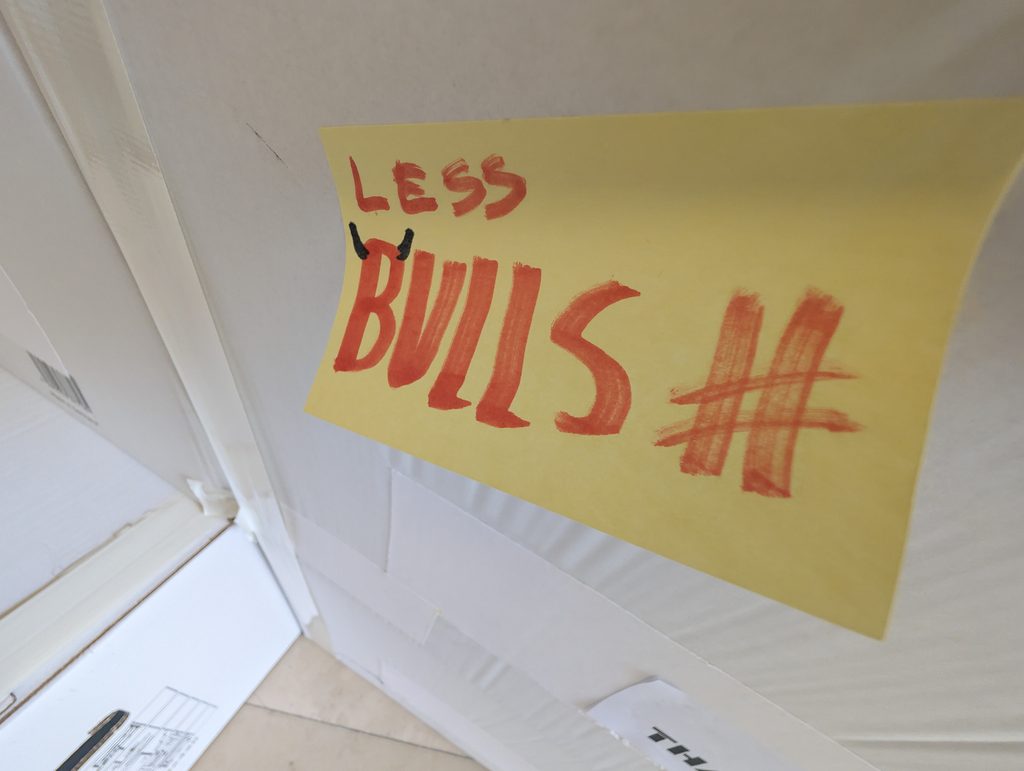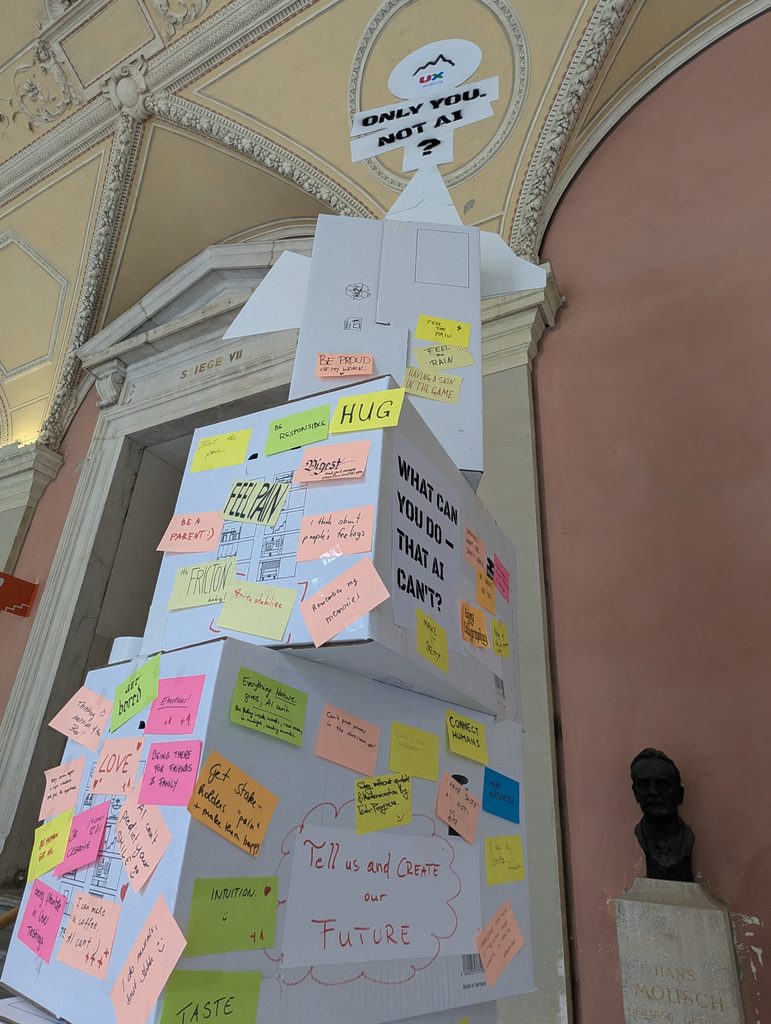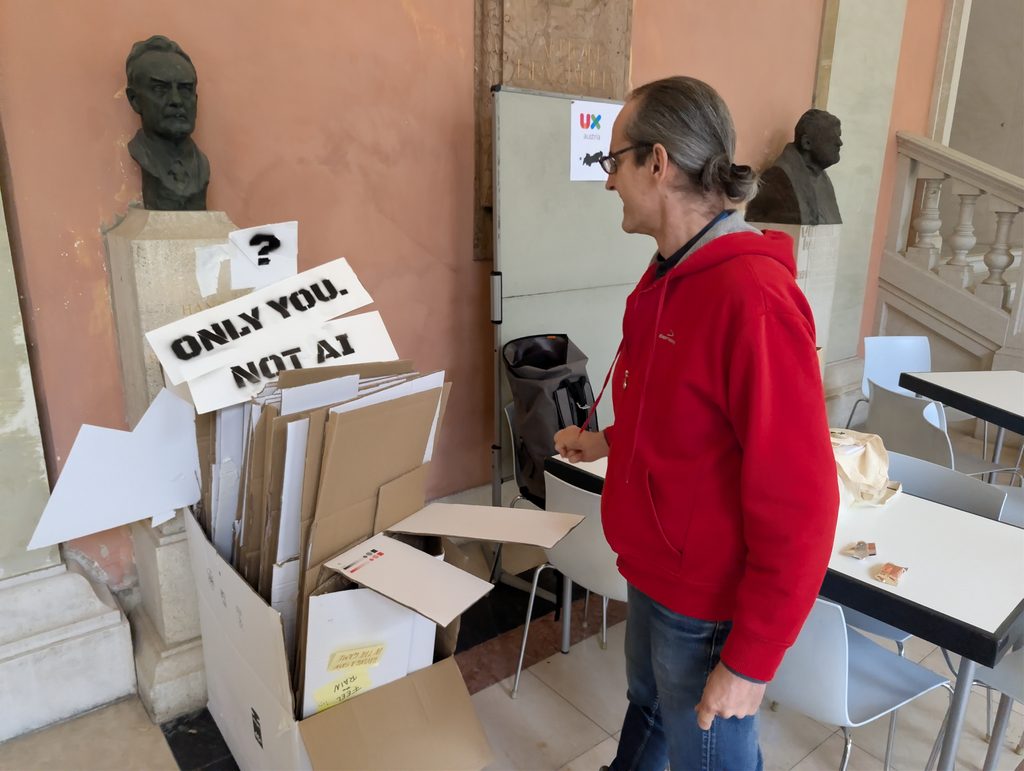
What can I do that AI can’t? You don’t get as far alone on this question as you do together. On the cardboard tower at uxcon26, in the Arkadenhof of the University of Vienna, people posted personal perspectives.
🤝 Built together with Martin Kastler, Thomas Grill, Emanuel Jochum-Zehetner. Thank you Christiane Moser, Johannes Lehner, Kornelia Müller (Hoffmann), Jakob Schnurrer, Max Scheugl for your support!
And thanks to the uxcon organizers Nicole Swoboda and Andreas Ablaßer, and to everyone who left a note.
From the big question to a small one
One question occupied us, as it did many in the UX community in Vienna, Salzburg, Linz and Graz: What is happening to our profession? Will UX be dissolved, taken over, transformed? The UX Community Austria booth at uxcon26 was meant to be the space where this question gets asked. Nobody had to answer it there.
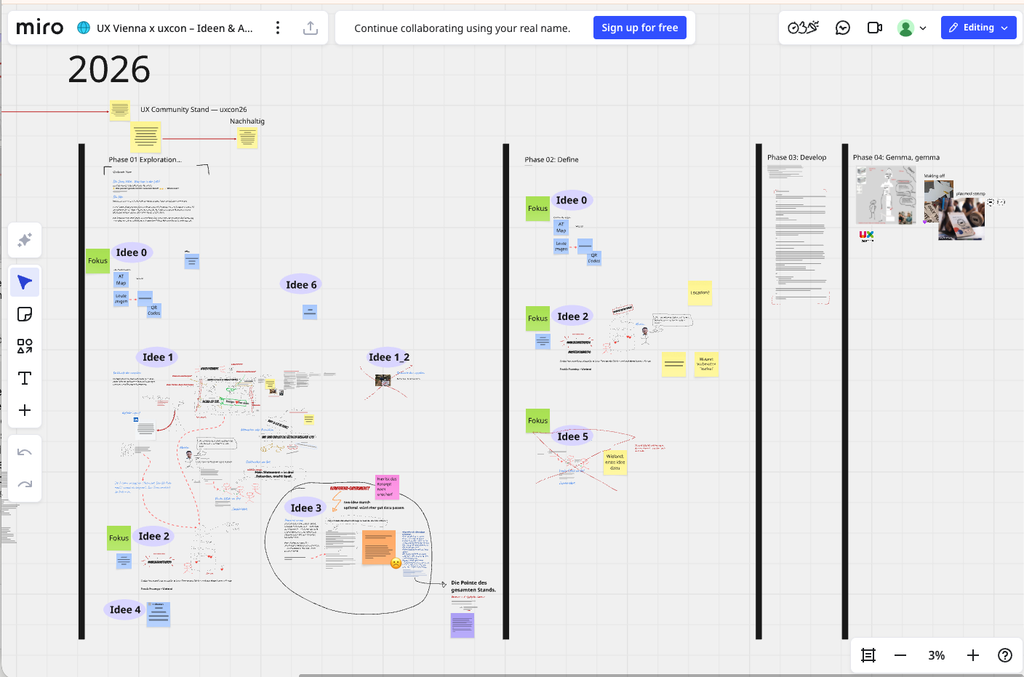
We turned it into a smaller question that can be answered in one sentence: What can you do that AI can’t?
The concept
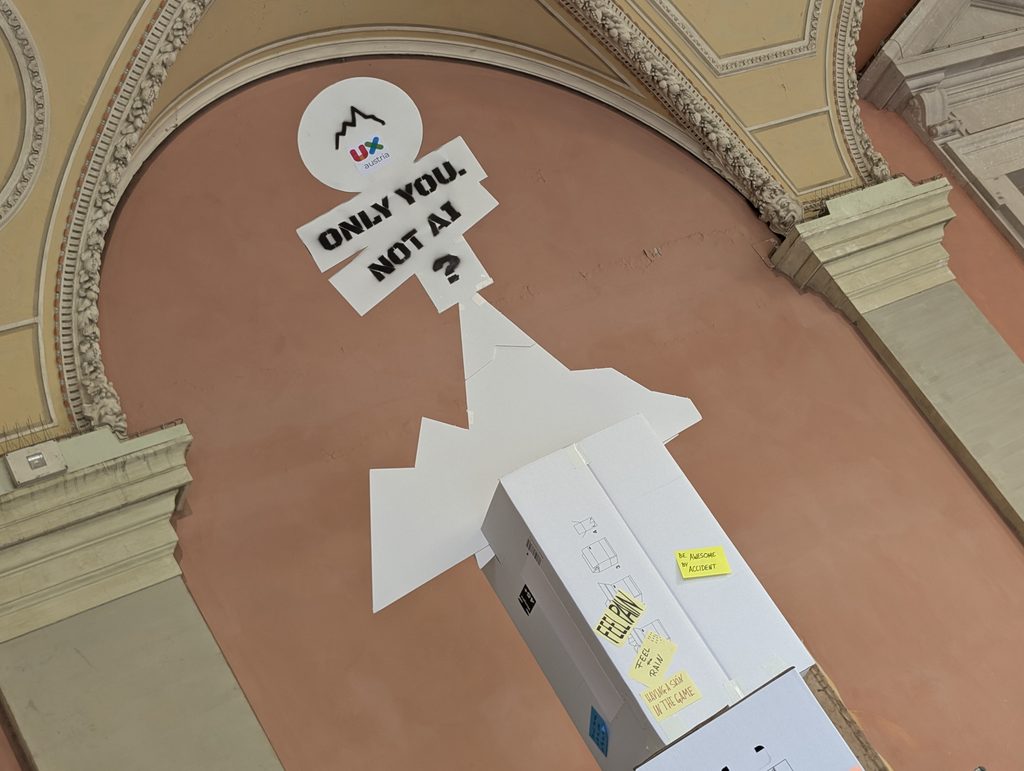
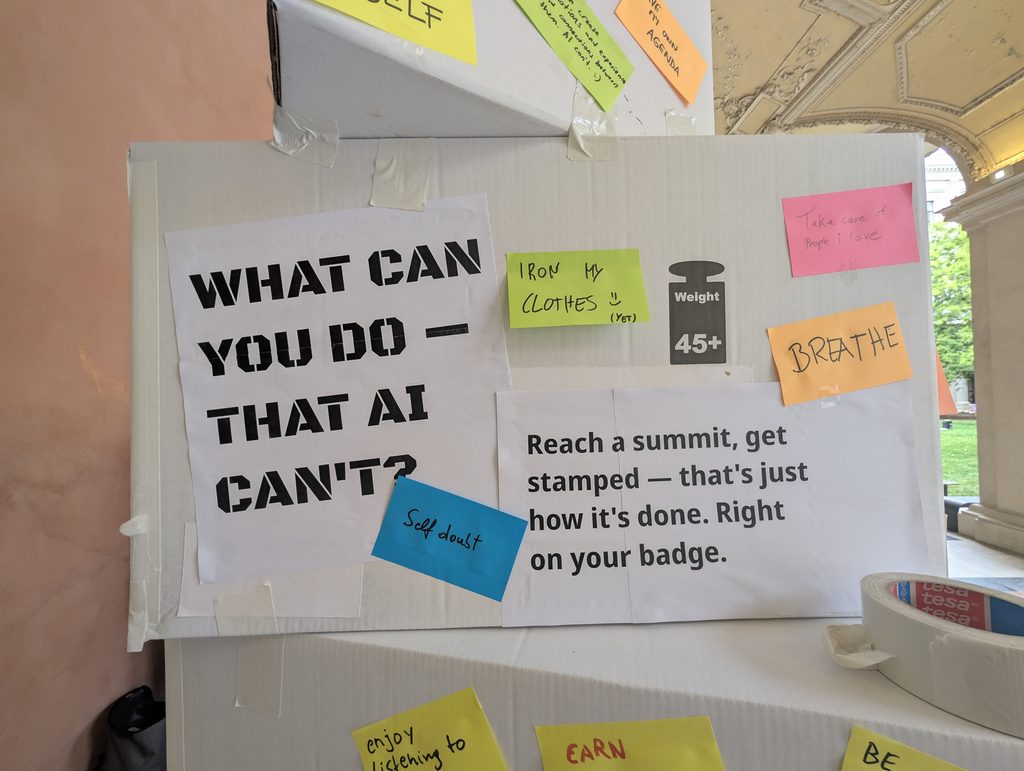
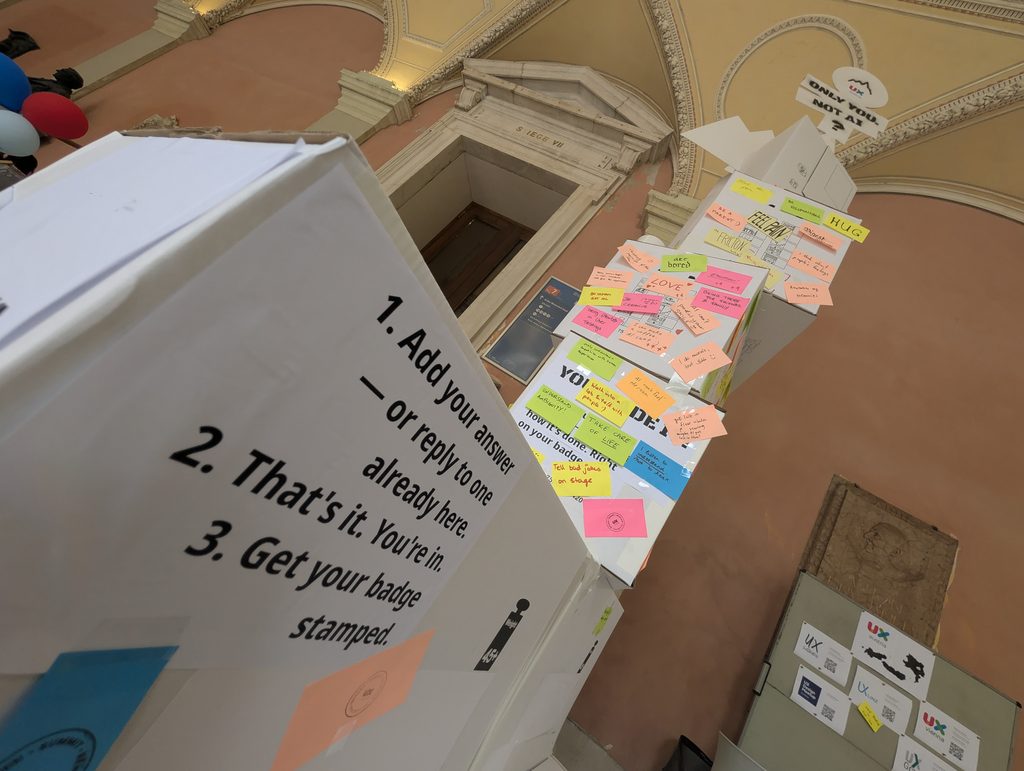
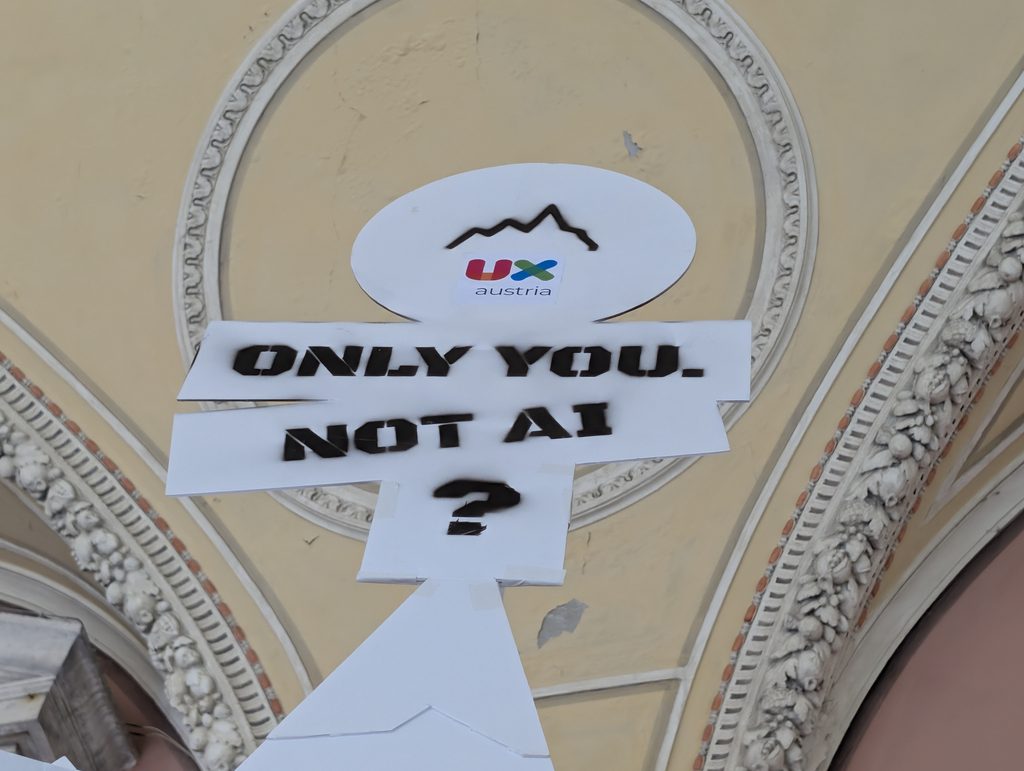
Instead of flyers, we built a cardboard tower. Cardboard costs next to nothing and brings its own mock-up aesthetic. At the very top it said “Only you. Not AI?”, and further down came the actual question: “What can you do — that AI can’t?”.
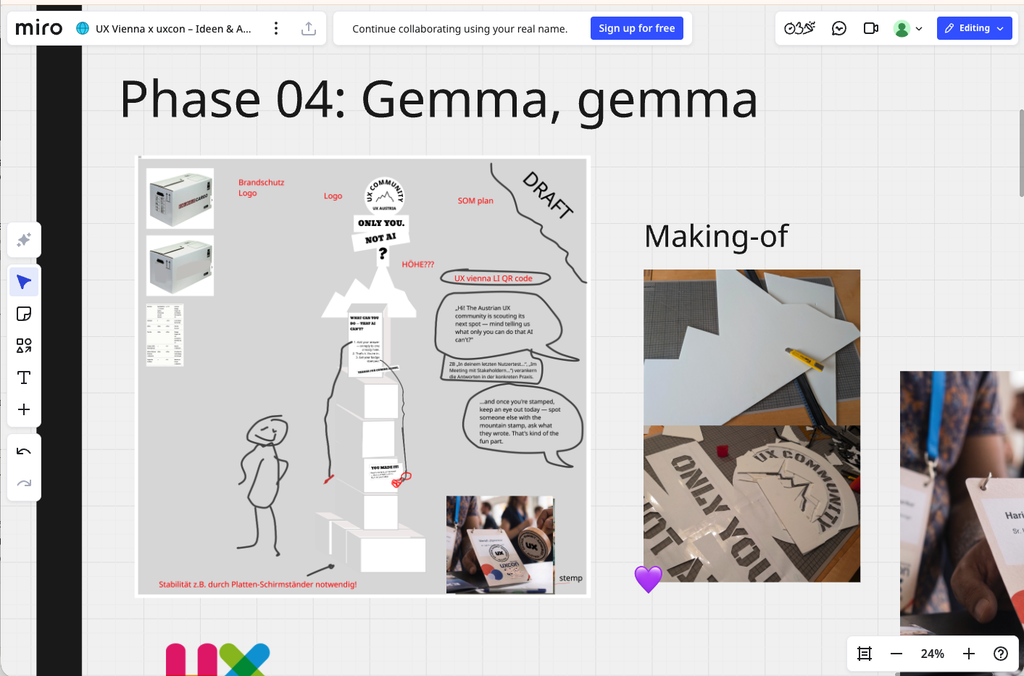
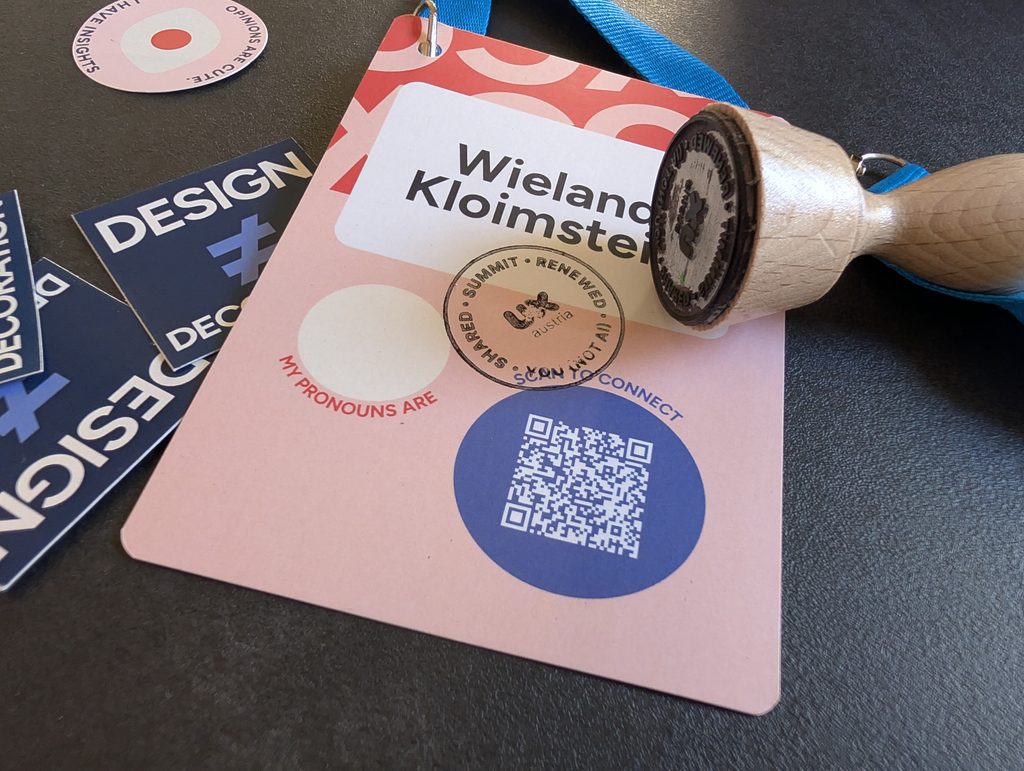
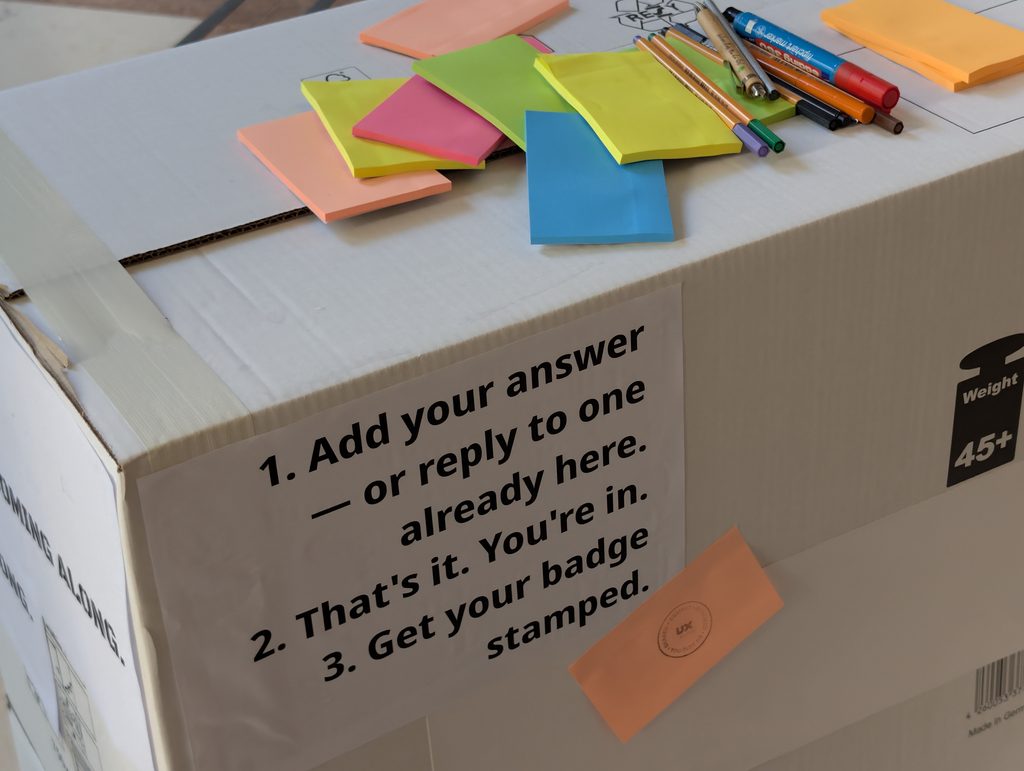
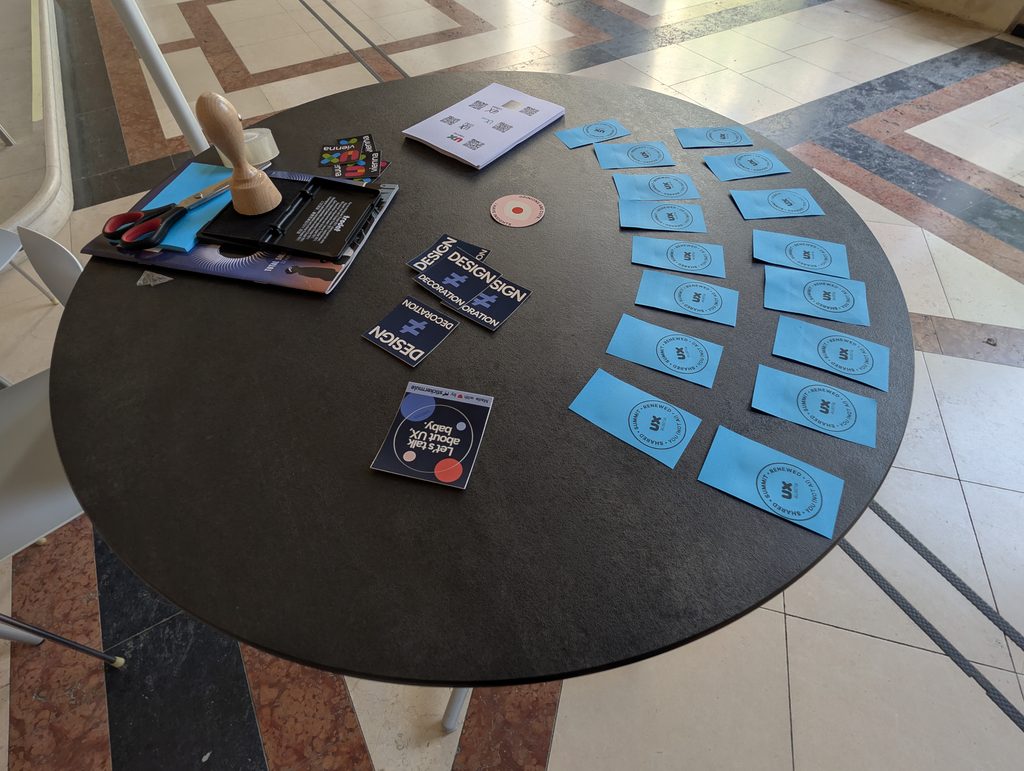
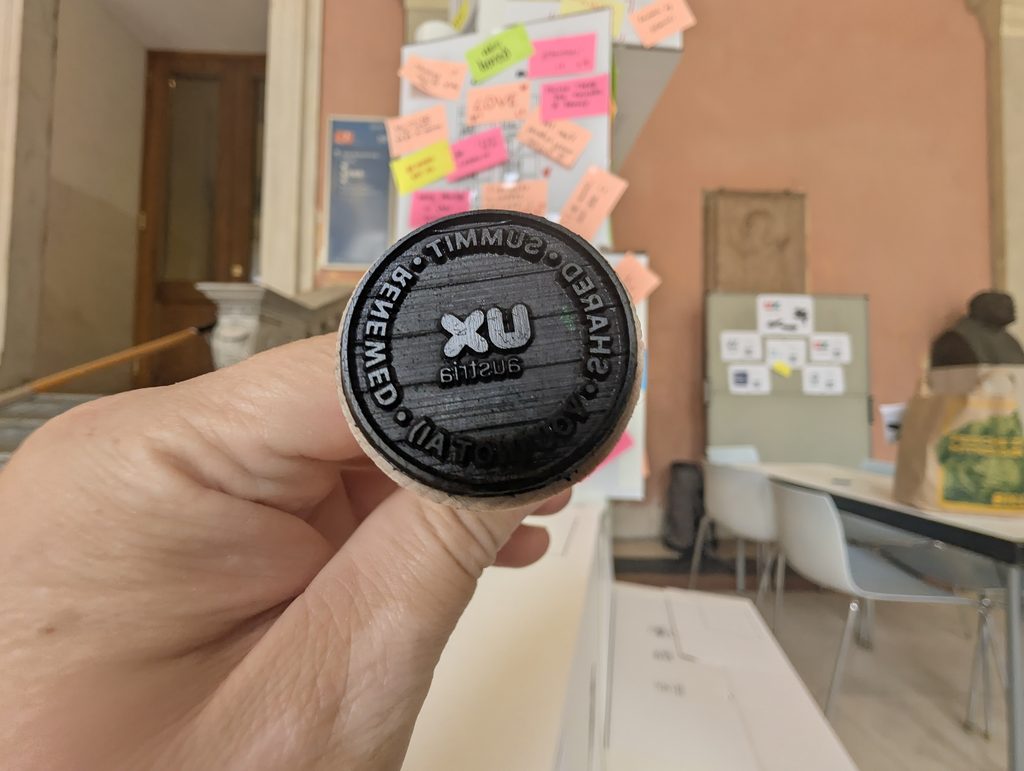
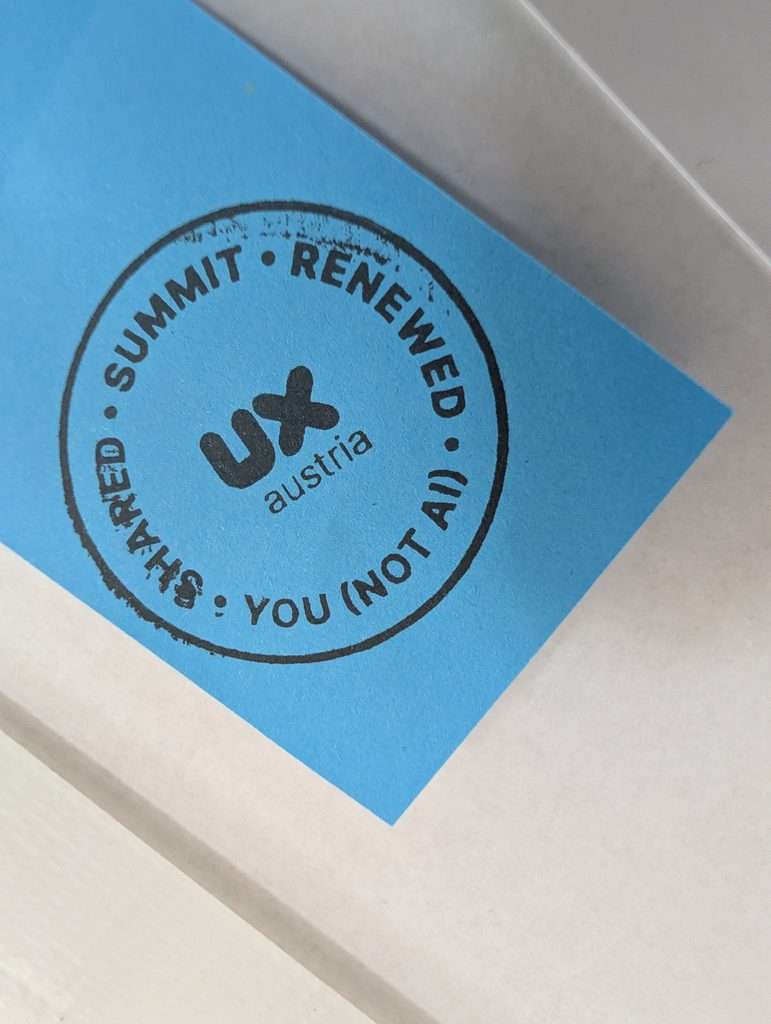
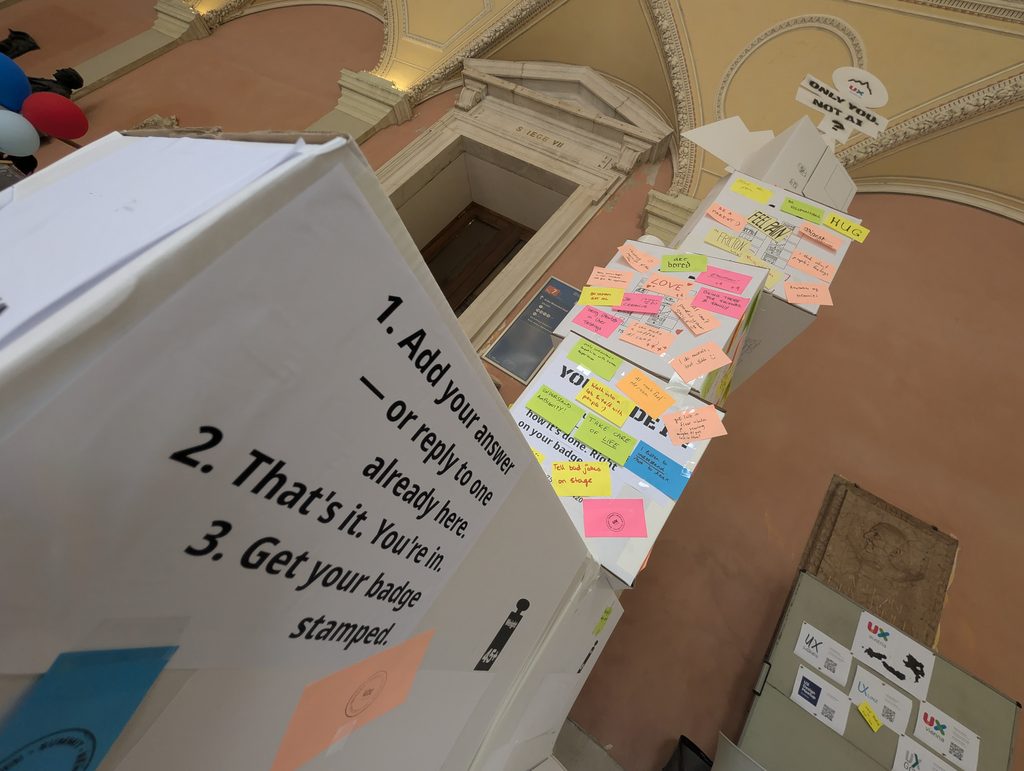
Whoever wrote a Post-it and stuck it on the tower got a stamp on their conference badge, just like at a summit, where in Austria you often find a stamp. The tower said so itself: “Reach a summit, get stamped — that’s just how it’s done. Right on your badge.”
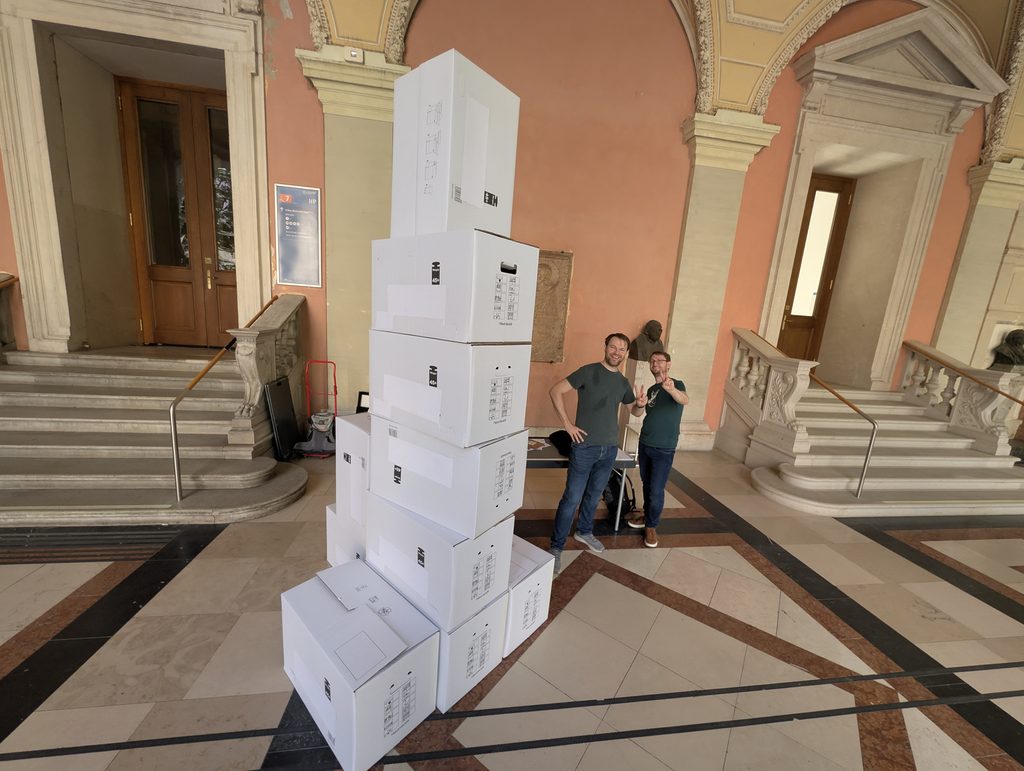
For me as a UX designer, it was exciting: a manageable project where you first plan the user experience, imagine how it could be, and then experience up close how it plays out.
How it went
People from Vienna, Salzburg, Graz and other parts of Austria strolled by between sessions. They looked, and laughed at some of the Post-its. We chatted and offered: if you have a perspective in mind, write it down.
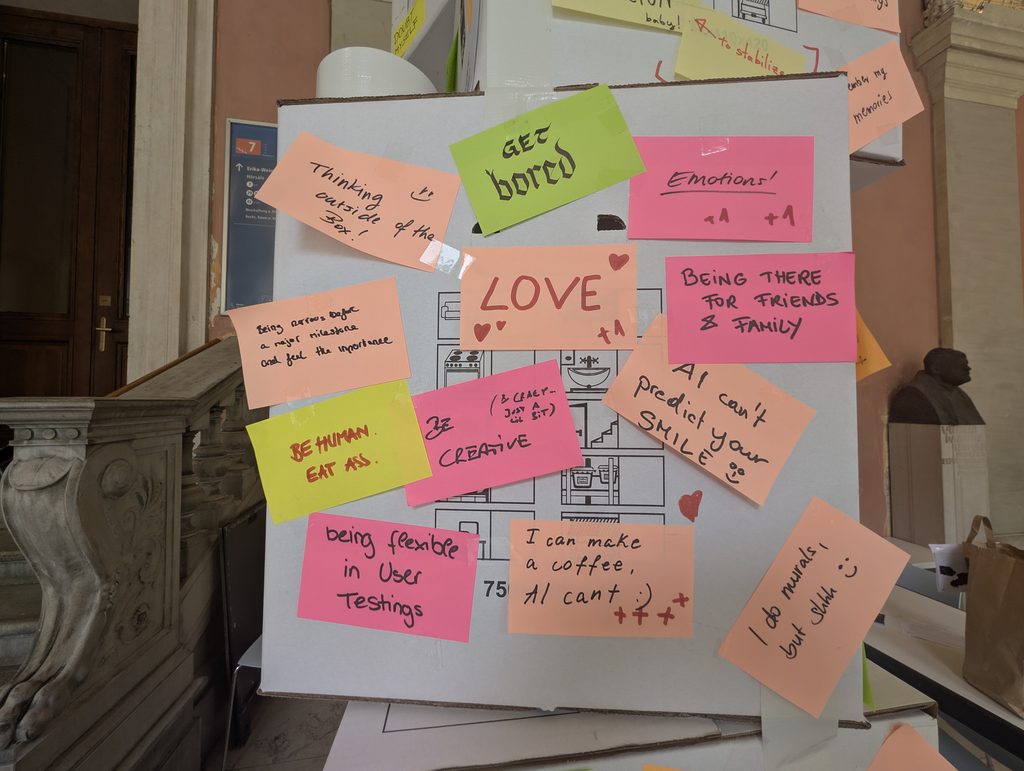
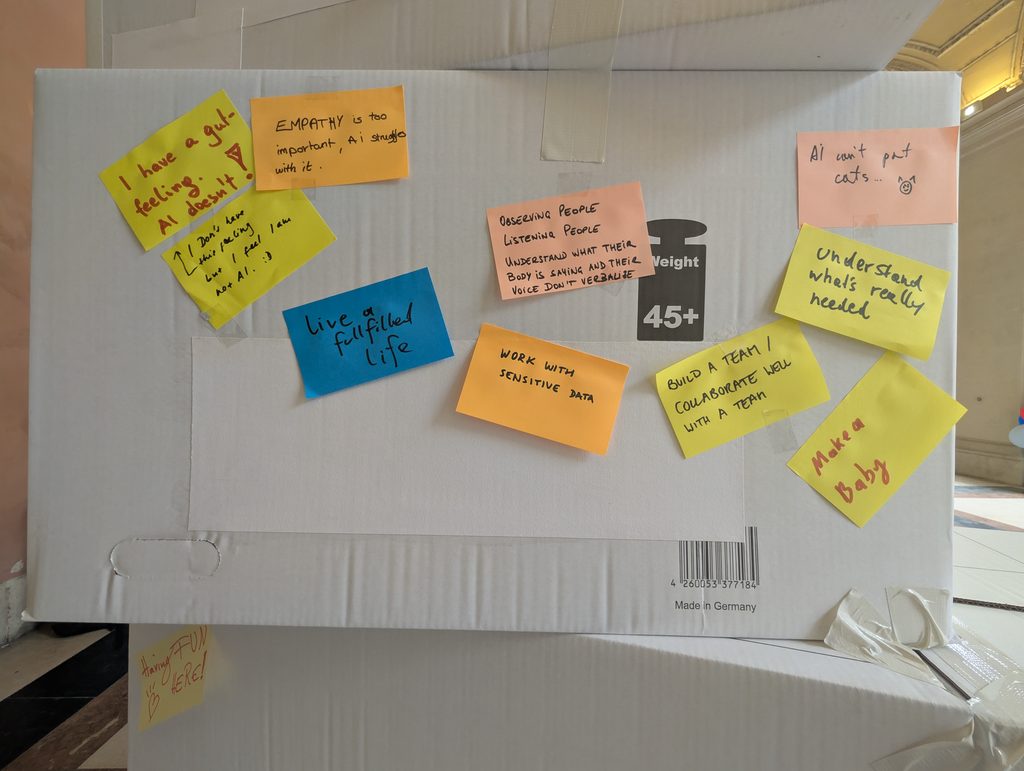
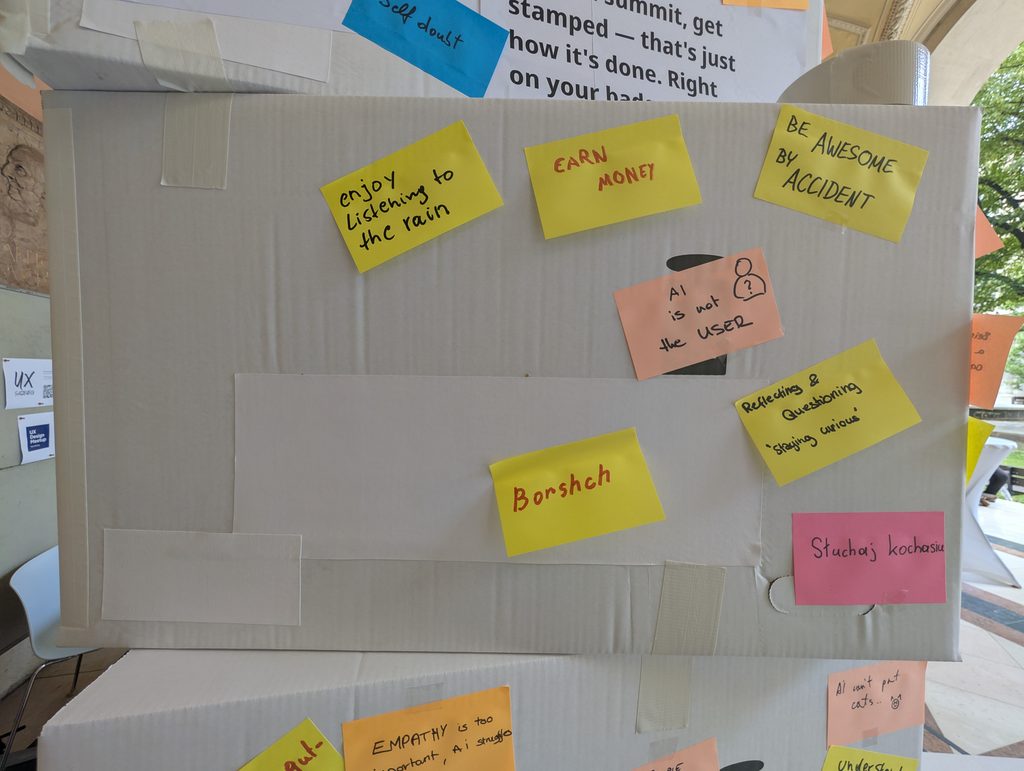
The notes were serious, funny and sometimes surprisingly personal. Some read “AI can’t pet cats…”, “BE HUMAN. EAT ASS.” and “be a great big sister”. It was an experience to watch people think and then read something private.
Hanging right next to each other: “I HAVE TASTE! AI NOT!” and “MAKE KÄSSPÄTZLE” (a cheesy noodle dish). “KNOWING WHAT WE DON’T KNOW” and “OR SHOULD NOT DO!” read together like a single sentence. And “Enjoy Calligraphy” was, of course, written in calligraphy.
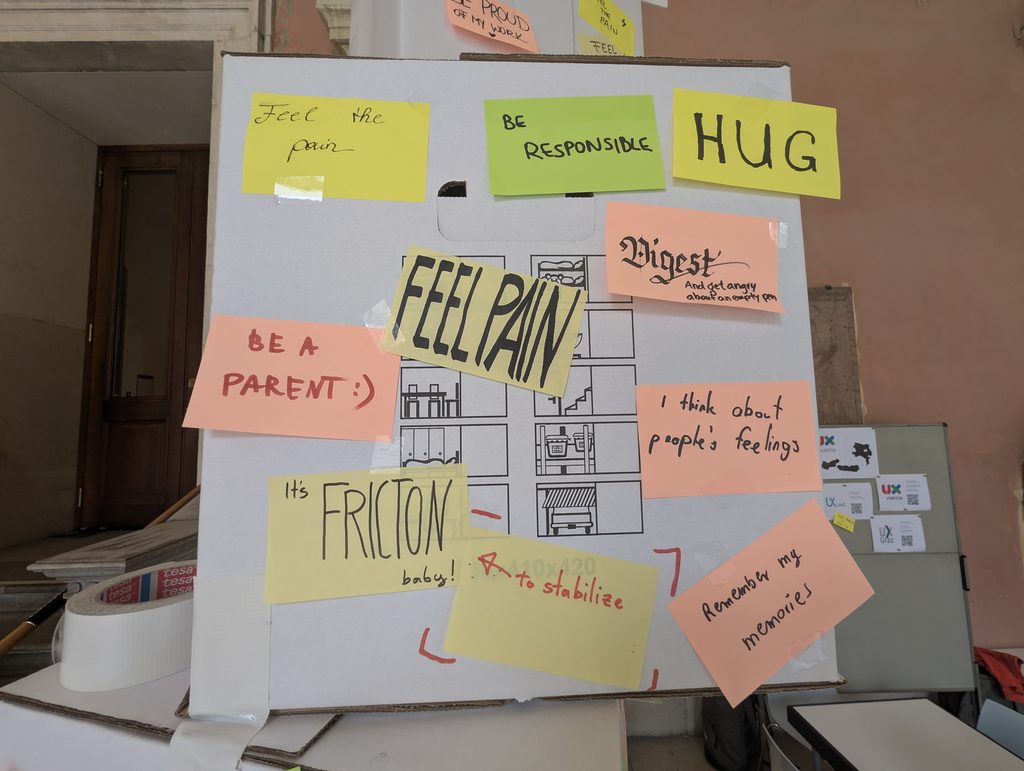
The notes turned into conversations. About “Feel the pain”, someone remarked with a wink that it’s probably not the dream job – feeling pain is no pleasant thing. But that connects to the note “FAILED AND LEARNED FROM IT”: we often learn the hard way – through pain.
One visitor actually liked AI and suggested a second tower: what AI does especially well. I found that right and interesting. There was no second tower, because what AI can do was very present at the conference anyway. Our tower brought in the other perspective.
Where to next?
About 90 notes from people who happened to pass by are not a survey. Asked what only they can do, many wrote about the body, taste, care and responsibility.
Where does all this lead? For me, it’s an exciting time. We enjoy many advantages of AI, and at the same time we have to find out what it can do, what it can’t, and what we can do. Somebody has to set the limits, and somebody has to decide. Design is an important junction for that. It is also where we check how different AI components work together. That takes grounding again and again: checking against reality before building on it.
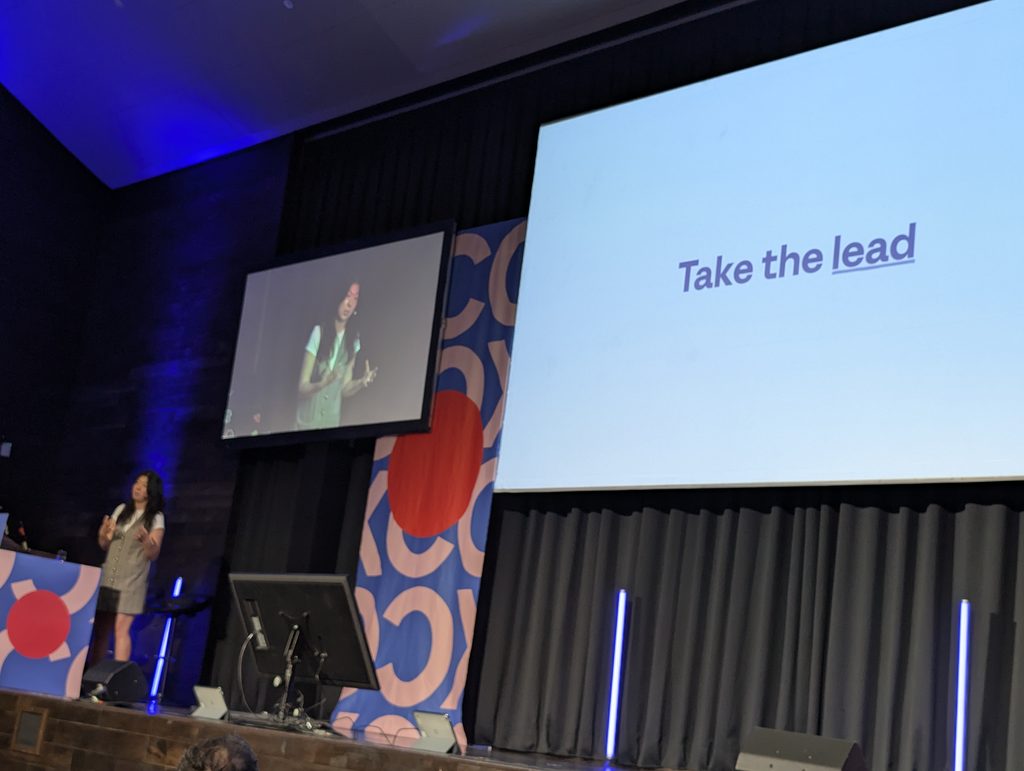
At uxcon, Meaghan Choi, Design Lead for Claude Code at Anthropic, urged designers in her session to step forward and be active. “Take the lead” was on one of her slides. To me, this is a big challenge, and it lies with all of us. Each of us has to contribute in a fitting way in times of AI so that quality is preserved. Organizations have to give people the space to do so. Sitting back is not an option, neither for individuals nor for organizations. Otherwise products and services get hollowed out by seemingly quick solutions.
What quick solutions lack is written on one of the notes: “Feel the pain”. A language model is trained to fulfill tasks pleasingly and feels no pain from future maintenance. Design is where a brief gets questioned and where it is decided what not to build.
What stays
The humor often lay in the combination of the notes. And it takes many perspectives to find out what we can do and what this new medium can do. That is what I liked most about it.
Gallery