
USECON in vienna are searching usability specialists…. i got it pushed via email from monster. maybe anybody is interested:
Category: Allgemein
PicLens 1.7
Das Browser-Add-on PicLens 1.7 kann jetzt gut mit Videos umgehen.

43. interaction design stammtisch
weil spanien fußball-eMeister ist gibt’s wieder einen interaction design stammtisch
dienstag, 8.7.2008 um 19:00 uhr
im werkzeugH, 1050 wien, schönbrunnerstr 61 [öffis: u4 pilgramgasse, 14a, 13a, 12a, 59a]
“bring’ 2 folien” hat bei den letzten stammtischen super funktioniert und darum: jede, die möchte, bringt 1-2 slides über das, was sie gerade im bereich interaction design, usability, … beschäftigt/interessiert mit … und stellt sie vor!
der interaction design stammtisch findet jeden monat am 2. dienstag statt. jede, die sich für die themen interaction design, usability, accessibility, user interface design, … interessiert, ist herzlich eingeladen
anmeldung ist keine notwendig
ps: nächstes mal gibt’s, wenn frau sonja dieses mal slides mitbringt, auch einen neuen reminder text — versprochen, aber nur dann
Infographics on Flickr
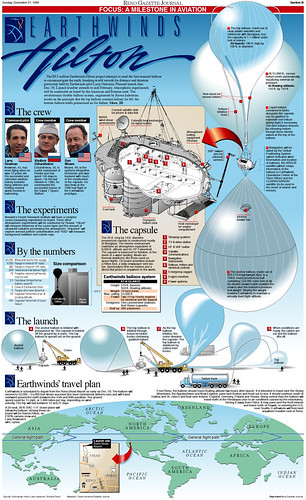
One of the best collections I’ve seen on flickr about infographics is the following:
http://www.flickr.com/photos/cooljerk/
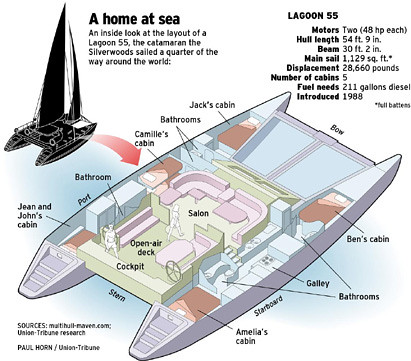
“…Portfolio of some of my favorite works from my tenure as Lead Infographics Journalist at The San Diego Union-Tribune (1994-2006)…”, seems that this guy is a quite interesting source 🙂
http://www.flickr.com/photos/cooljerk/sets/72157594243078359/
and some more …
Usability Challenge 2008
Maybe some of you have already heard something about the usability challenge.
“On 1 August 2008, we are asking anyone with a passion for usability to solve a usability problem…any usability problem at all…and help make the world a better/safer/less annoying place.”
———————- Doesn’t sound that “wonderful” ? ———————–
What you have to do:
1) Find a usability problem
2) Design a solution
3) Share it with a person who can solve the problem by implementing your solution
There is also a Google and Facebook Group about it, where you can join. We could also talk about it in our next “stammtisch” – a bit variation to our daily usbility problems we discuss. Maybe we find a good solution for something.
Or someboday likes to bring 2 slides for the problem? Jürgen maybe? 😉
New Interaction Design Pattern Library
Adding to what is already out there, this pattern library is the result of a Master project at FH Potsdam. I think it’s well done! http://niceone.org/infodesign/
Apple WWDC 2008: iphone 3G (video-summary)
I found this video-summary on youtube about the amazing next steps of the iphone 3G. To watch the complete keynote please visit Apple’s website.
I just watched this summary but not yet the complete keynote. So there’ll be some more stuff on this entry I think 😉
Paper
On april 29th an 30th I had the opportunity to take part on a workshop called “From User Stories to User Interface Design“ held by catalysts, (Christoph Steindl and Christian Federspiel). These guys are rather not User Interface Designers but more Software Engineers and Project Managers who got a lot of experience in software development projects at e.g. IBM, Siemens and VAI. So I was very curious about the workshop.
Actually I just had time to visit the second day, but nevertheless it was a great experience and brought me some kind of aha-effects, which I’ll try to describe.
Bill Buxton’s book “Sketching User Experiences” layed the base for most of the examples we went through. But get a bit more into detail. Of course every UI Designer knows about Paper Prototyping. But when was the last time you built a paper prototype in a group of 3 to 4 Interaction Designers, tested it with real users, redesigned it and presented the whole stuff to an audience? And all that within one hour?


pictures: http://www.nngroup.com
Of course one and one the most stunning points is quality & speed. When you create a paper prototype, test it (with three to five users) redesign it on base of this feedback and do this process again.
Using e.g. HTML prototypes for this procedure normally takes me several days. Concentrating too early on the graphic-design is also one of the problems I have to face as a designer. But the second (and maybe far more interesting) point for me is that when I use paper for a prototype (which takes me normally 30 to 60 minutes) I have absolutely no problem to throw it away again. And this is definitely not the case with my HTML prototypes: “Well, now I spend that much time yet, I can’t do this all again. Let’s see what we can use”. The barrier for making a compromise is much, much lower with paper. And that’s an interesting argument, I think.
As mentioned, several examples can be found in Bill Buxtons book. Here is one I really love …
For over 40 years Bob Spence has pursued research in two fields, engineering design and human-computer interaction. He is a fellow of the IEEE and a fellow of the Royal Academy of Engineering.
42. interaction design stammtisch am 10.6.2008
trotz fußball-em gibts einen nächsten interaction design stammtisch. vielleicht gibts ja beiträge zu interaction design/usability im kontext fußball 🙂
dienstag, 10.6.2008 um 19:00 uhr
im werkzeugH, 1050 wien, schönbrunnerstrasse 61, statt. [öffis: u4 pilgramgasse, 14a, 13a, 12a, 59a]
“bring 2 folien” hat bei den letzten stammtischen super funktioniert und darum: jeder der möchte bringt 1-2 slides über sachen, die ihn gerade im bereich interaction design, usability, … beschäftigen/interessieren mit, und stellt sie vor.
der interaction design stammtisch findet jeden monat am 2. dienstag statt. jeder der sich für die themen interaction design, usability, accessibility, user interface design, … interessiert ist herzlich eingeladen. anmeldung ist keine notwendig.
adaptive path video
The way most organizations think and work on products and services isn’t suited to the unpredictable world we live in. Instead, companies need new ways of think…